
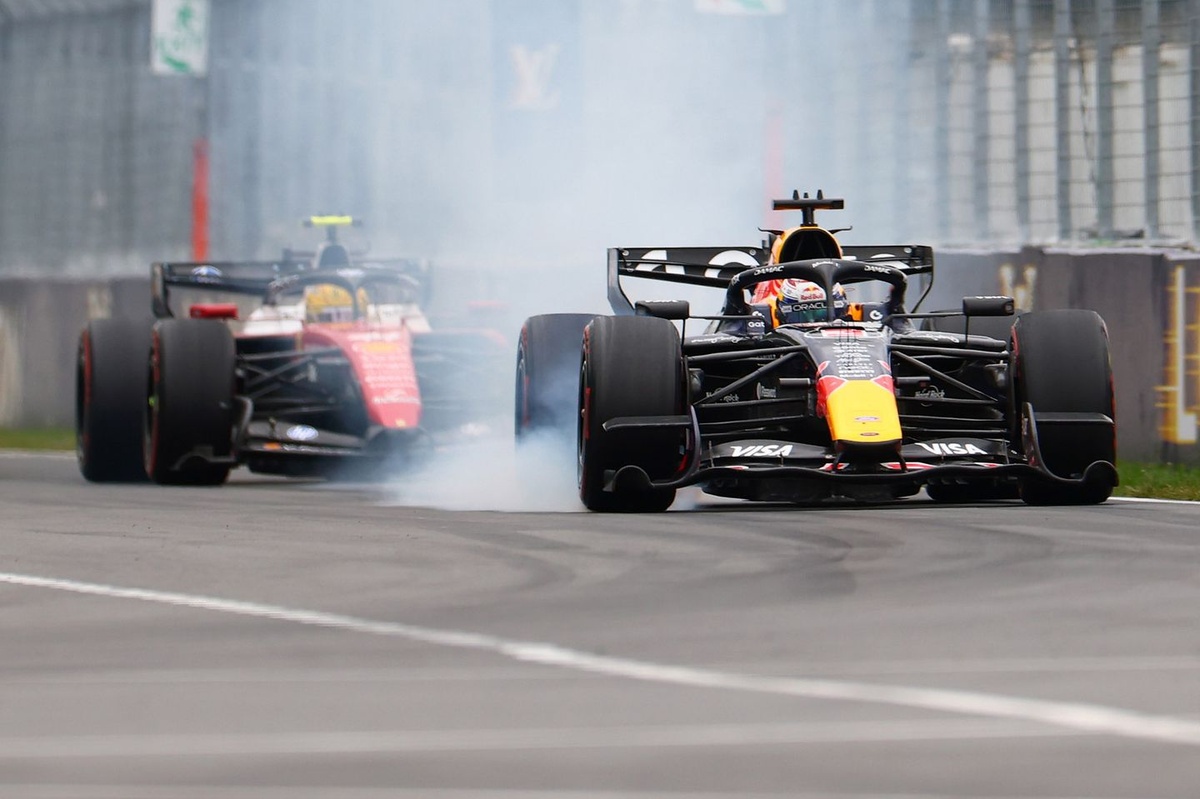
Formula 1 power unit rules remained a contentious topic among the sport’s elite after the Canadian Grand Prix on Sunday, despite the race’s lively overtaking and closer‑than‑ever car packs.
Drivers acknowledge tighter racing but criticize engine delivery
Mercedes’ George Russell and newcomer Kimi Antonelli exchanged positions that kept the team’s heart rate elevated, while the duel between Ferrari’s Lewis Hamilton and Red Bull’s Max Verstappen highlighted the spectacle. Hamilton, however, noted that the straight‑line power delivery still feels “weird” – the engine fades midway, dropping RPMs before the finish line, a stark contrast to the relentless pull of the V8 and V10 eras.
Verstappen echoed the sentiment, stressing that spectators are unaware of the complex battery‑charge limits and formation‑lap constraints each driver navigates, calling for a return to a “more pure” formula.
Miami‑inspired energy tweaks ease but do not solve the issue
The adjustments introduced in Miami, aimed at reducing driver anxiety over hybrid deployment, have allowed teams a broader system allowance. Antonelli admitted the new parameters “helped quite a bit,” yet he still must vigilantly balance throttle position and battery state to extract optimal lap performance.
Both Hamilton and Antonelli agreed that vehicle designs have improved, enabling cars to follow one another more closely, which in turn fuels on‑track battles. Nonetheless, they emphasized that the power‑unit side still requires further development, with Antonelli suggesting future regulations might grant “a bit more power to the combustion” element.
Future regulation outlook for 2027
With qualifying sessions continuing to draw criticism, the podium finishers warn that the current rulebook does not fully address the sport’s needs. Verstappen warned that without the proposed 2027 modifications – specifically an increase in combustion output – the series risks losing its natural racing feel.
As teams and the FIA weigh possible overhauls, the consensus among the leading drivers is clear: more authentic power delivery is essential for F1 to retain its competitive edge and satisfy both participants and fans.
 "
"