
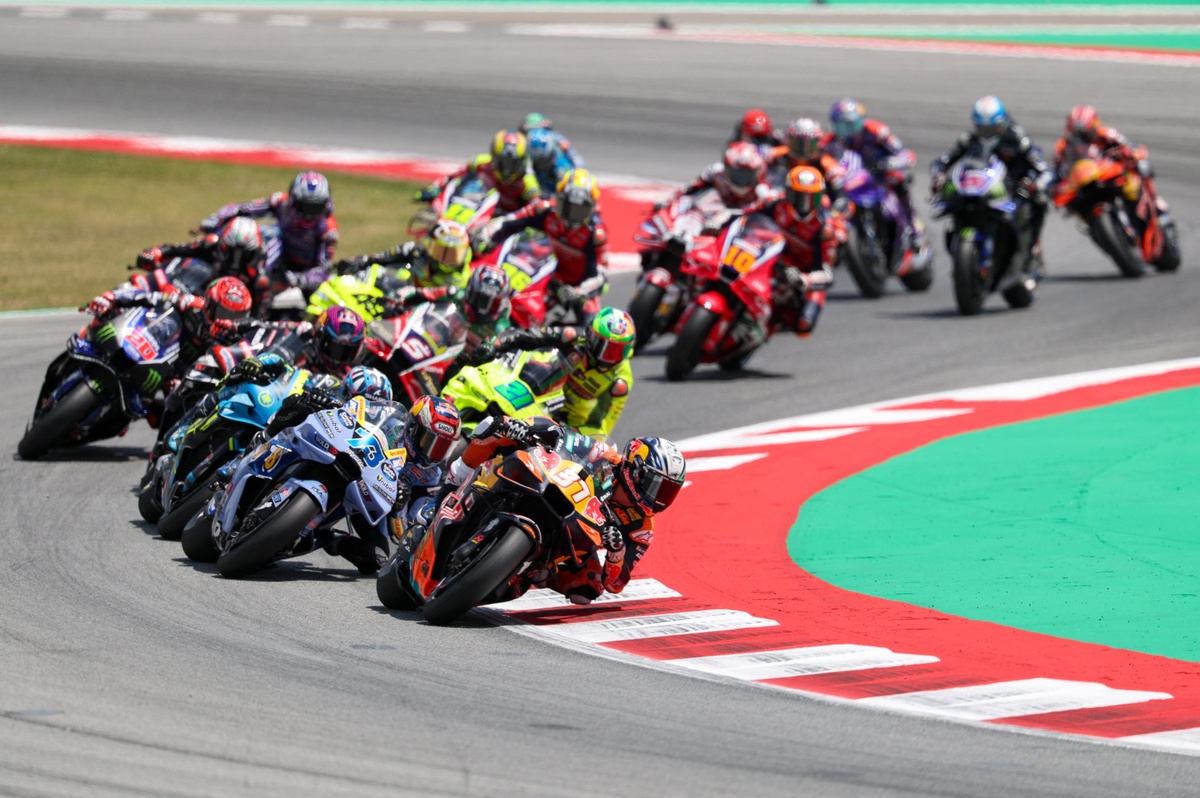
MotoGP announced a four‑point safety plan aimed at preventing repeats of the Barcelona crashes that left Alex Márquez and Johann Zarco injured.
What triggered the emergency meeting?
During the Catalan Grand Prix, Márquez collided with Pedro Acosta after the KTM rider suffered a sudden technical failure, while Zarco’s leg was trapped between Pecco Bagnaia’s rear wheel and exhaust on the second restart. Both incidents prompted MotoGP sporting director Carlos Ezpeleta to convene a safety summit with team principals at Mugello.
Ezpeleta emphasized the riders’ recovery, thanked stand‑in riders Michele Pirro and Cal Crutchlow for covering the demanding weekend, and pledged a thorough review of every detail that contributed to the accidents.
Grid spacing and start‑line changes
The first proposal calls for a wider separation of bikes on the starting grid, giving riders more room to maneuver into turn 1 and reducing the likelihood of a “bunch‑up” similar to the one that ensnared Zarco.
All eleven factory and independent teams reportedly agreed that the current grid layout is acceptable but could be improved, with Ezpeleta suggesting implementation no later than the 2027 season, subject to circuit‑specific constraints.
Equipment bans and protective modifications
Secondly, MotoGP plans to prohibit the use of holeshot‑assist ride‑height devices at the start of a race. The system, which lowers the chassis for a smoother launch, currently requires riders to brake hard to release it; failing to do so can lead to loss of control. Although a ban is already scheduled for 2027, the organization is considering an earlier rollout.
Two additional technical measures target the motorcycles themselves. Manufacturers will explore redesigns around the swingarm and rear‑wheel area to stop a rider’s limb from becoming caught, a scenario that traumatized Zarco. Simultaneously, engineers are tasked with developing a viable solution that does not compromise bike performance.
Rider‑alert system and future outlook
The final suggestion introduces a visual warning—such as a flashing light—to signal when a bike ahead abruptly loses speed. While Ezpeleta admits this may not have helped Márquez, who was already tail‑gapped, the cue could prove decisive in other close‑quarters situations.
Team representatives will discuss these concepts with the Safety Commission later today, after which a timeline for adoption will be refined.
Should the proposals be approved and executed by the 2027 season, MotoGP could witness a noticeably safer launch zone, fewer high‑risk entanglements, and a clearer protocol for sudden bike failures.
 "
"