
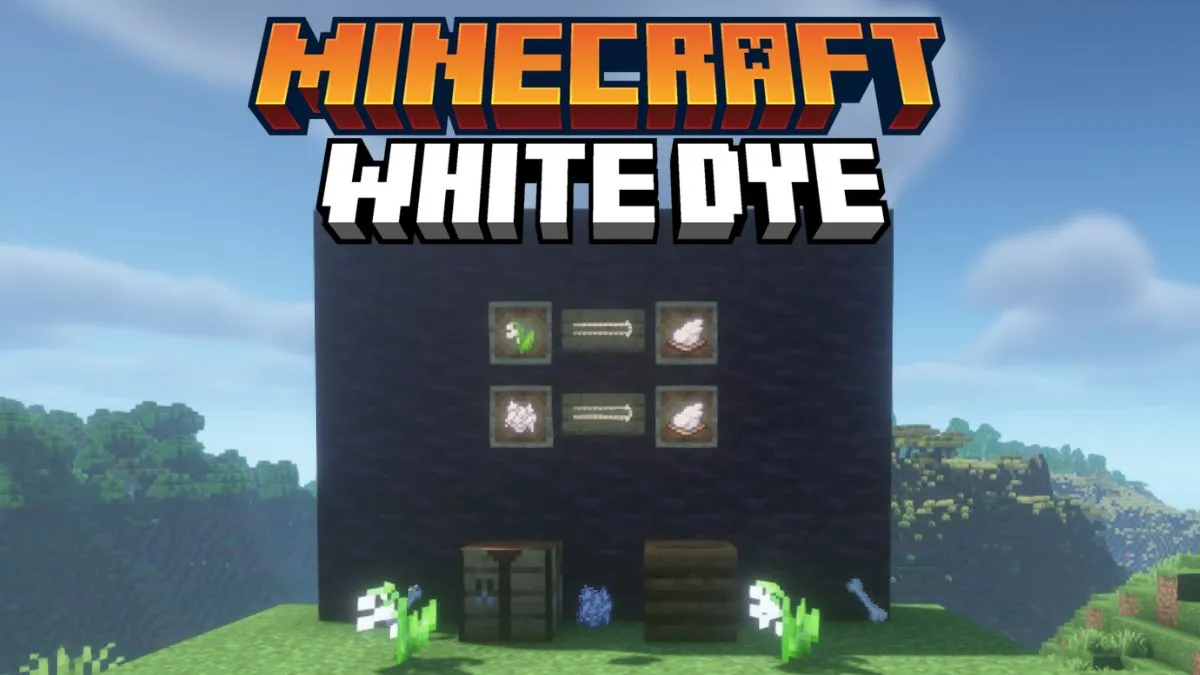
White dye is the foundation of every colour in Minecraft, obtainable with bone meal or Lily of the Valley, and it turns instantly into a single white dye block when placed on a crafting grid.
How to Craft White Dye
Drop either one bone meal or a Lily of the Valley into any crafting slot; the result is a white dye that appears on the adjacent output slot in the crafting interface.
Bone meal can be harvested by crushing skeleton bones or by placing seeds and other crops into a composter until it emits bone meal. Lily of the Valley grows in Flower Forest biomes and can be collected by walking through its white blossoms.
This simple recipe works both in a 2×2 crafting table and an in‑game inventory, no separate workstation required.
Alternative Sources in the World
Wandering Traders occasionally offer white dye for emeralds. These roving merchants appear across the map with two llamas and have rotating inventories, so a trade can surface repeatedly.
Trail Ruins present a more adventurous option. When you reach the ruins, use a Copper Brush on the suspicious gravel blocks; the chance of revealing a white dye is low, but the exploration adds a layer of excitement.
Creative and Practical Uses
White dye powers the full spectrum of decorative craft items: wool, terracotta, stained glass, glass panes, concrete powder, beds, and candles can all be dyed white.
Leather armor can be recoloured, and sheep wool is dyed to produce white wool. Pet collars and other leather items can also be customised with the dye.
Sweetening the Palette: Crafting Secondary Dyes
Mixing white dye with a basic coloured dye produces lighter variants:
- Lime: Lime dye + White dye
- Green: Green dye + White dye
- Light blue: Blue dye + White dye
- Pink: Red dye + White dye
- Gray: Black dye + White dye
Strategic Takeaway
Mastering white dye’s craft and acquisition routes unlocks a versatile toolkit for builders, allowing swift transitions between structural designs and aesthetic details in any Minecraft world.
 "
"