
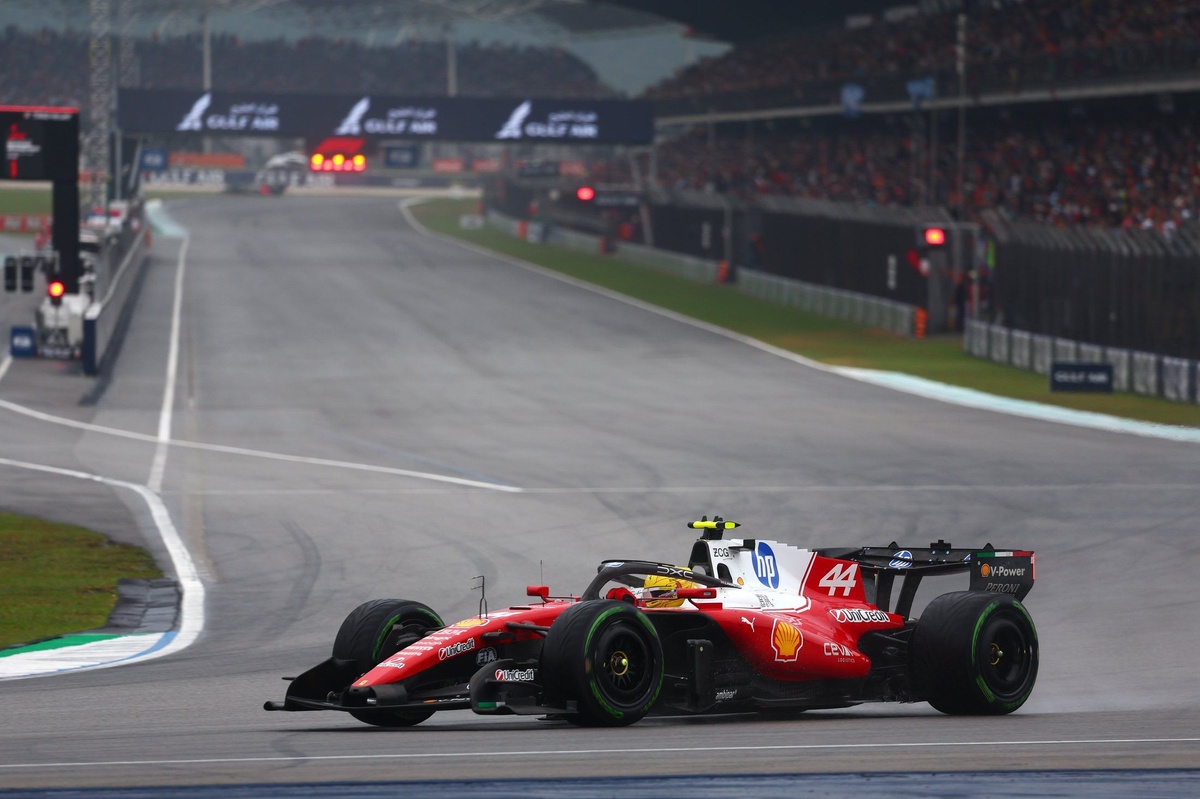
A 53‑minute pause halted the Bahrain Grand Prix after a damp formation lap exposed a software glitch that disabled throttle control for several cars.
Wet Formation Lap Uncovers Power‑Unit Bug
The start was delayed 40 minutes by a downpour at Bahrain’s Bahrain International Circuit. As the cars slowed on the formation lap, a fault in the power‑unit software rendered throttle input ineffective for front‑row qualifiers Max Verstappen and Lewis Hamilton, forcing a standstill that triggered a red flag.
FIA single‑seater specialist Nikolas Tombazis explained that the bug ignited because the season’s new machinery, which delivers 47 % electrical power, had never been rigorously tested in actual wet conditions. The power unit reacted unpredictably to the very slow speeds, preventing power redeployment and stopping the cars from restarting.
Tombazis noted the lack of extensive wet‑running tests as the root of the flaw, saying: “We didn’t manage to test the software as extensively as we would have liked.”
Fast Action and Software Fix
After the incident, FIA officials swiftly identified the problem and issued a software update to the teams. The adjustments were installed on the cars—an effort that took roughly twenty minutes inside the grid, even though the pause felt like several hours to spectators.
“We didn’t test the software as extensively as we would have liked, because there has been very little wet running this year. A combination of circumstances caused the bug to kick in,” Tombazis said.
He praised the FIA’s rapid response: “Once the problem happened, our guys realized very quickly what was happening and had to work under a lot of time pressure for an update. The teams had to install it, and it took about 20 minutes.”
Driver Reactions and Team Tactics
Sergio Perez labelled the sequence “unacceptable,” while Lando Norris described it as “just horrible,” adding that it proved the system should not include such a reliance on the electronic side. Fernando Alonso, after a strong outing for Aston Martin‑Honda, cheekily remarked, “I had 50 % DNFs this year; they never stopped the race for us.”
As the track cleared, the FIA’s quick fix and the drivers’ frustration underscore the delicate balance between cutting‑edge technology and race‑day reliability in Formula 1.
 "
"