
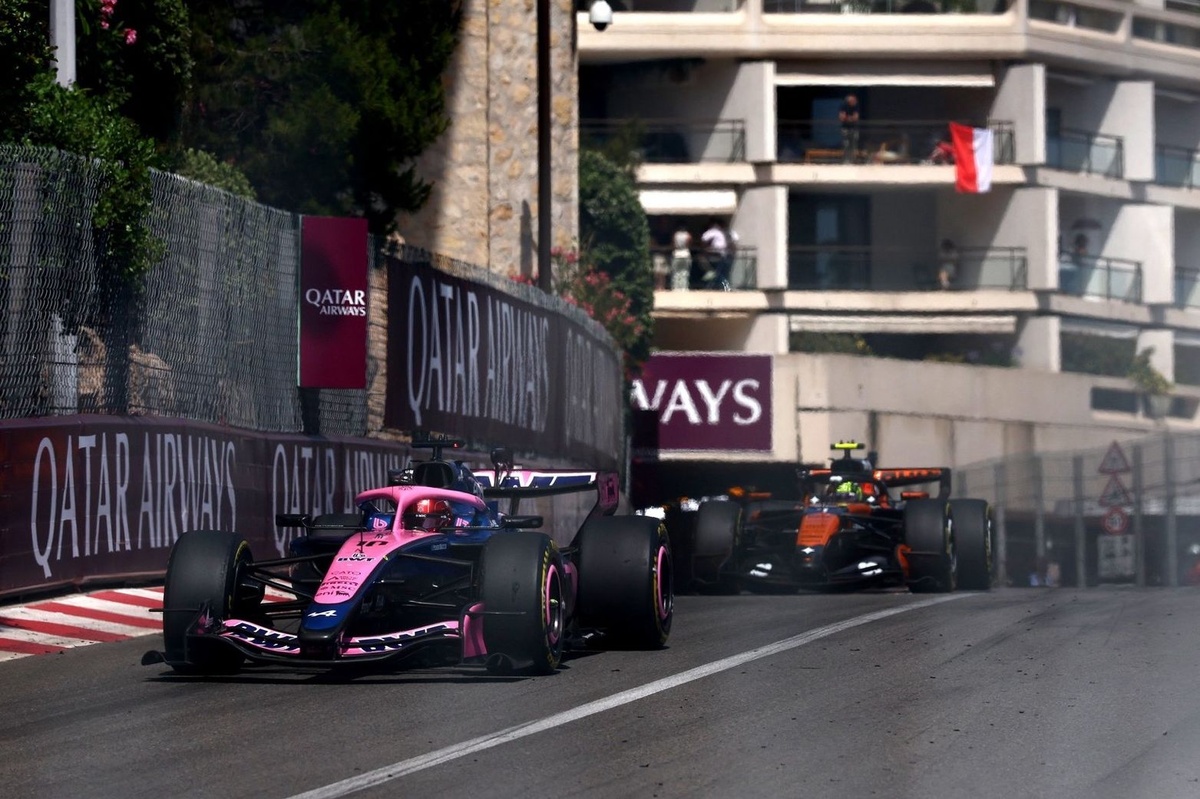
Driver Pierre Gasly insists he never breached the pit‑lane speed limit at the Monaco Grand Prix, a claim that threatens to overturn the race‑day penalties across the grid.
Pit‑lane penalty wave sends Alpine mad
Alpine’s team boss, Steve Nielsen, called the cluster of penalties—six in total, including two on Gasly “very, very unusual” for a single event—anomalous in an F1 season. Lewis Hamilton, Oscar Piastri, George Russell and other drivers received identical sanctions, a pattern that raises questions about the pit‑lane system.
Broken system or driver error?
Gasly, who overtook Lando Norris on lap one, swore he had not exceeded the 60 kph limit, citing that he stopped the limiter earlier than required to enter the pit lane. Alpine representatives say their cars were set to 59.5 kph, half a kilometre per hour below the mandated threshold.
Alpine’s report suggests drivers may have taken a shorter route through the pit lane, either cutting across the white lines at entry or exit, thereby triggering the system.
The technical guts behind the timing
Formula One Management supplies the pit‑lane timing infrastructure, built to gauge the time between checkpoints rather than raw speed. The method penalises drivers who traverse the distance faster than possible under the speed limit, but does not specify how fast the speed limit should be measured.
- Monaco’s narrow pit entry and exit may disadvantage a standard radar‑oriented system.
- Drivers that cut through the white lines on the white sign—known among teams—could artificially reduce the measured interval.
- Telemetry and GPS data from the cars could prove that the speed limit was never surmounted.
Right of Review: a game‑changer?
Alpine has requested a Right of Review, hoping the FIA will show the evidence that led to the penalties rather than re‑applying the existing decision. The request is not an appeal; it provides a platform for data exchange and a clearer understanding of the system’s operation.
In 2023, the Haas team used a similar process to challenge track‑limit enforcement in the United States Grand Prix, but the stewards dismissed the material as “not new.”
Impact beyond the Alpine’s podium
George Russell received two penalties: a standard speed‑limit sanction and an additional one for not serving it correctly, eroding his points haul. If the stewards accept Alpine’s argument, the legitimacy of the penalties across the field could be called into question, potentially opening a review of every Red‑flagged driver.
FIA’s position appears to be that teams were notified of the pit limiter setting prior to the race, a claim Alpine disputes. The stewards’ independent assessment will decide if the system was fit for its purpose in Monaco’s unique arena.
Looking ahead: could Monaco rule change?
Should the review determine a flaw in the pit‑lane timing setup, Monaco may be required to adopt a different or improved monitoring method, particularly for circuits where the pit lane’s geometry can lead to short‑cutting. Yet a successful case will probably not recoup Gasly’s podium placement or rescue Russell’s championship hopes.
The debate crystallises when the stewards declare: “Decisions of the Stewards are taken independently of the FIA and are based solely on the relevant regulations, guidelines and evidence presented,” a stance that could either confirm or challenge the integrity of the current enforcement system.
 "
"