
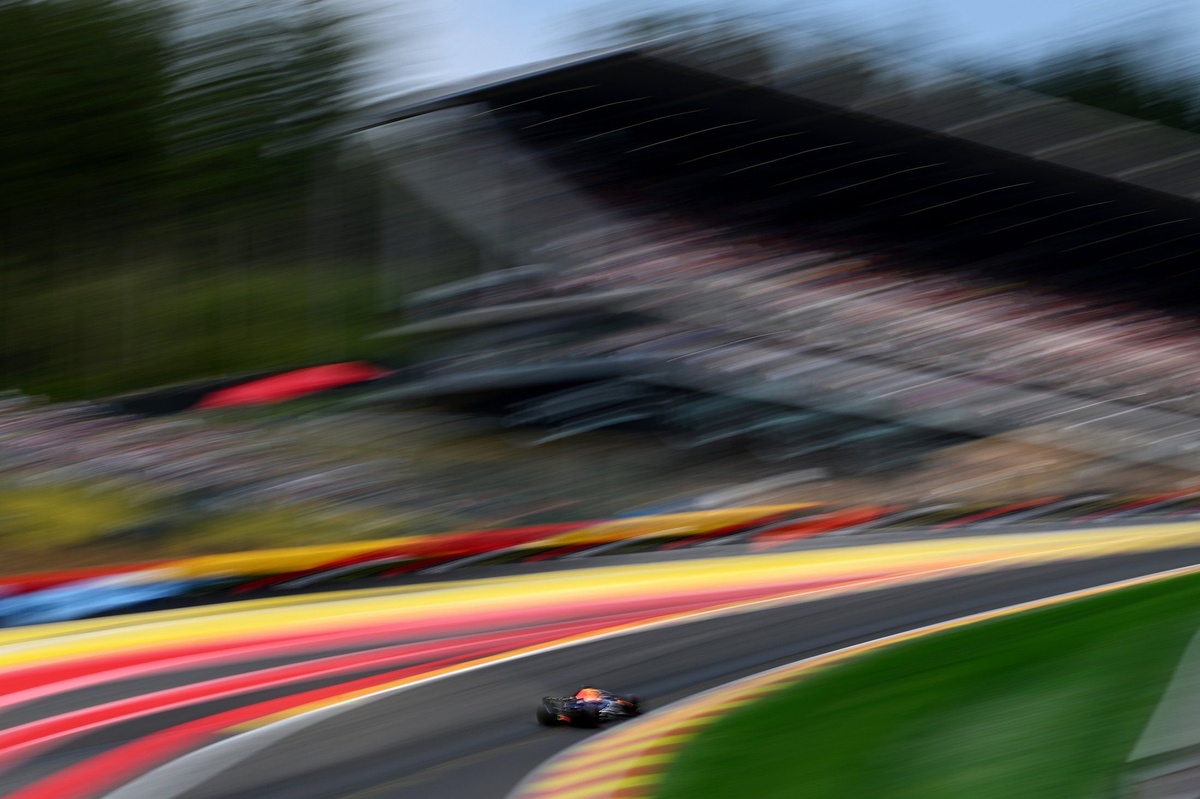
Kimi Antonelli secured pole at Spa‑Francorchamps, underlining a circuit‑wide concern over the limited power available in the second sector.
Power Limitations in Sector Two
Drivers explain the core of the issue lies in the second sector, where generators such as the MGU‑K are disengaged.
It forces the cars to run solely on the internal combustion engine, yielding roughly 540 horsepower instead of the 1,000‑plus delivered at the corners.
Verstappen Calls the Circuit “Different”
Max Verstappen, who qualified second, said the loss of electric assistance makes Pouhon feel more like a straight than a corner.
He added, “I am mentally readjusting; it’s not what I prefer but it’s now the reality on track.”
Driver Reactions Go Beyond One Name
Carlos Sainz, Lando Norris, and Oscar Piastri all echoed the sentiment, noting a 50‑km/h loss at Blanchimont and questioning the role of electric power in shaping race dynamics.
“Pouhon used to be a great corner,” Piastri remarked, “but it feels different now because we exit off it with far less force.”
Engine Horsepower Across the Grid
Current F1 units produce about 540 hp without MGU‑K, while the Mecachrome engines used in F2 reach roughly 620 hp.
In comparison, F3 cars generate around 380 hp, highlighting the steep drop when the electric boost is removed.
Future Energy Balancing Plan
Regulators will shift the balance of combustion to electric power in two stages, aiming for a 60‑40 split by 2028.
The objective is to smooth the power curve across the track, yet the current gap is forcing teams to rethink race strategy.
With the track’s power profile shifting, teams are looking to harness subtle gains from the limited electric output to keep the competition sharp.
 "
"