
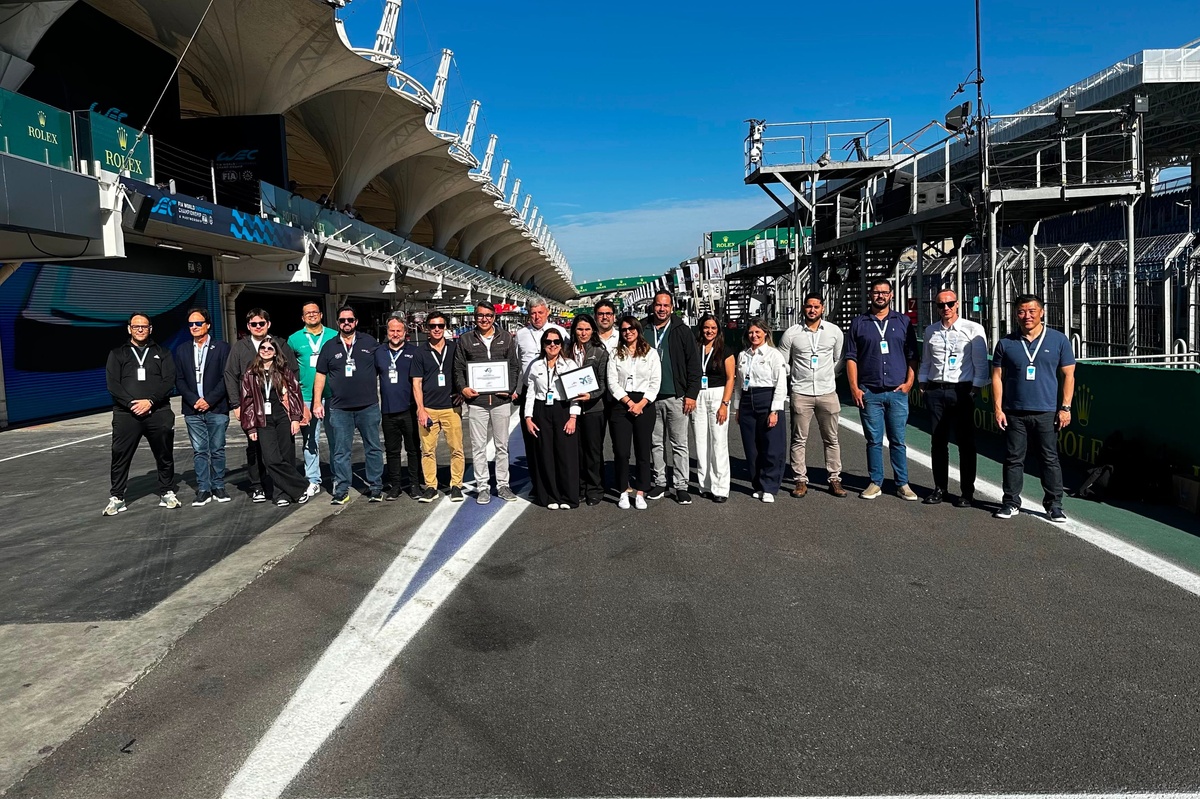
ArcelorMittal earned the FIA Road Safety Index’s highest three‑star rating during the Six Hours of São Paulo, becoming the first Brazilian company to secure this certification.
FIA’s Road Safety Index in Action
The World Endurance Championship event served as a platform for the FIA’s Road Safety Index, an international programme that gauges corporate road‑safety maturity. It evaluates carrier management, driver safety protocols, training programs, anti‑alcohol and drug policies, journey monitoring, use of safety devices, and accident‑prevention processes. Certification follows a two‑stage procedure: an internal self‑assessment and a subsequent independent audit that assigns a maturity level.
ArcelorMittal’s Stellar Performance
The steel conglomerate’s Santa Catarina, Brazil facility underwent the self‑assessment before an FIA‑approved audit, ultimately achieving a three‑star rating. The single‑certified plant also supplies the safety cage that protects drivers in Stock Car race cars, an element that demonstrates how motorsport innovations migrate to industrial safety applications.
Industry Reactions
“The FIA has a long history of translating race‑track innovation into real‑world safety,” said Luanda Dantas Guerra, President of the Brazilian Automobile Association (AAB). “Seeing ArcelorMittal receive the highest Road Safety Index rating during one of the world’s premier motorsport events reinforces this link.”
Marcia Spelta, ArcelorMittal’s General Manager of Health and Safety, added, “This certification proves that our risk‑management approach aligns with international best practice and strengthens our commitment to protecting people.”
Broader Impact
Governments and businesses across the globe are adopting the FIA’s index as a benchmark for improving road safety management. By aligning corporate operations with motorsport‑derived safety standards, the program aims to narrow the gap between high‑performance racing safety and everyday mobility practices.
ArcelorMittal’s success illustrates how lessons from the track, coupled with rigorous certification, can elevate safety culture within industrial settings and inspire other companies in Brazil to pursue similar goals.
 "
"