
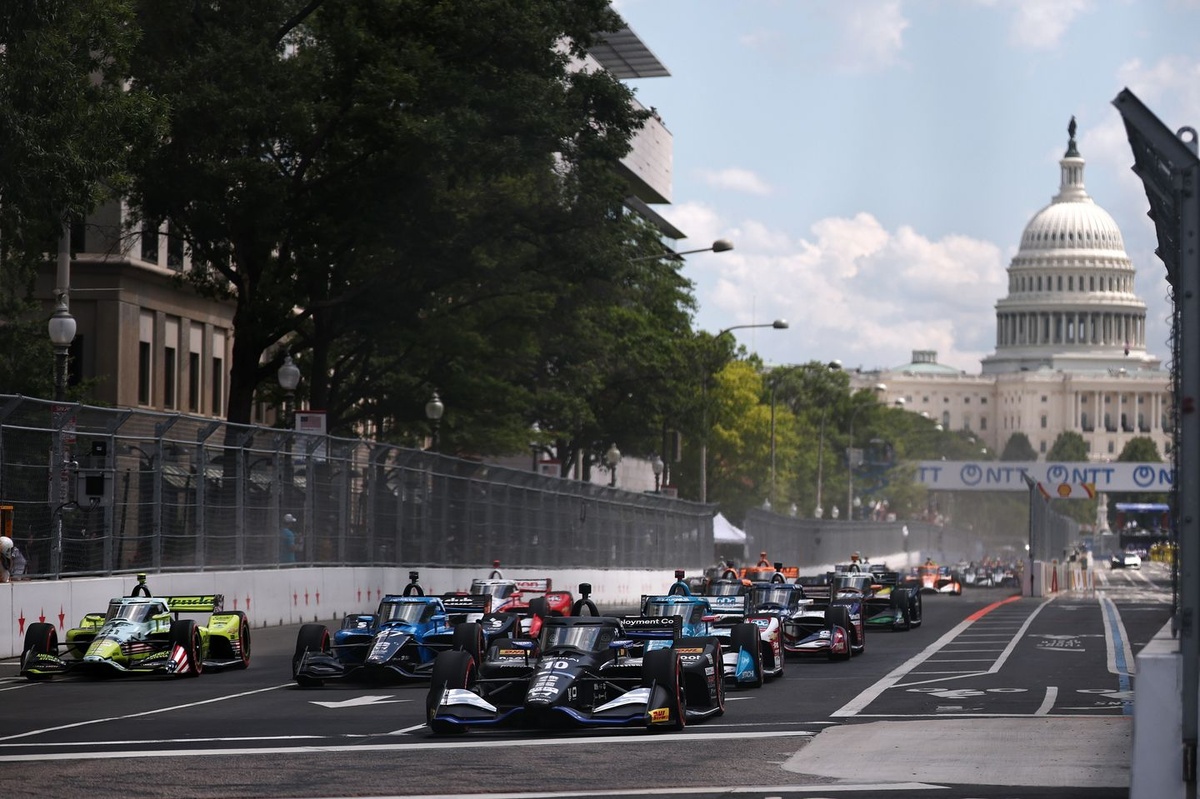
IndyCar’s Washington Revival
The 147‑lap Freedom 250 Grand Prix around the National Mall finished with a victory that could define IndyCar’s future in the capital.
Rapid Turnaround and Street Work
After an executive order on January 30, organizers cut 1.7 miles of public streets into a race track in just seven months. They had to grind asphalt, cover gas lines with sand and concrete, and weld manhole covers to make the surface passable for racing.
Paperwork demanded 1,350 pages of permits, a figure that dwarfs Detroit’s 200. Bud Denker, Chairman of the event, noted that such hardcore logistics stem from the city’s complexity rather than a lack of cooperation.
Track Layout and Cost Efficiency
Initially contemplating a 3.8‑mile circuit out to 14th Street, the 1.7‑mile, seven‑turn layout was chosen. Every 0.25 mile of track, wall and fence demands cost over $500,000, prompting the tighter configuration.
Temporary walls that cost more than $3.5 million were shipped in 300 truckloads from Fredericksburg, Virginia, and combined with fences and bridges acquired from races in Detroit and Arlington.
Stakeholder Approval and Future Plans
215,000 spectators attended the weekend, spending $969,000 on merchandise during Saturday alone. Law enforcement recorded zero protests; the event is described as the best‑run operation the city has witnessed.
White House officials, the Secret Service, and the mayor’s office have lauded the execution, and President Trump called to push for a five‑year extension that would cover his term and two years under the next administration.
Financial Feasibility and Long‑Term Outlook
Although the infrastructure investment has already been made, the event remains expensive. Denker said it is a sunk cost that will depreciate with each future race. He also highlighted the need to secure sponsors beyond the 250‑year celebration, questioning whether a 251‑year event would carry the same appeal.
Ultimate approval will depend on the willingness of IndyCar owner Roger Penske and organizers to align profitability with the political momentum behind the calendar insertion.
With the capstone of a flawless execution and political momentum, Washington, D.C., could become a recurring feature on the IndyCar schedule, provided the financial equation can be balanced and sponsors commit beyond the milestone year.
 "
"