
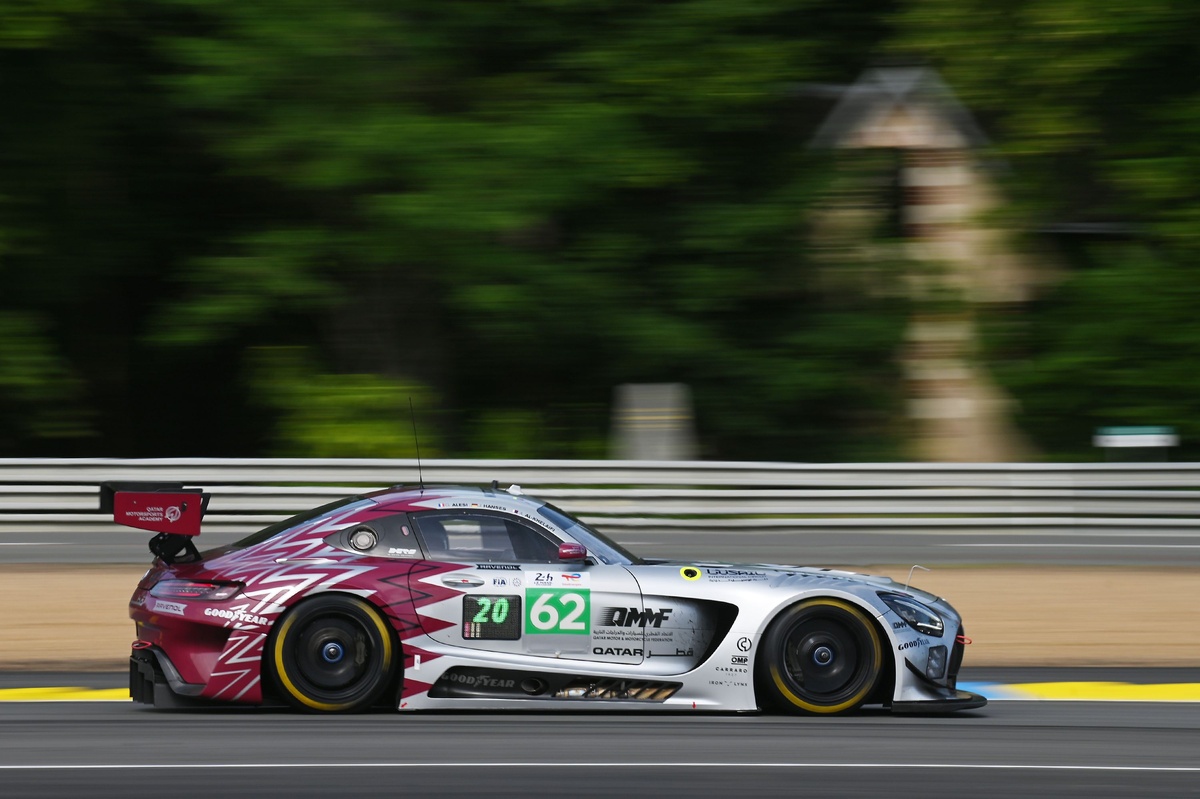
Qatar’s first‑ever entry to the 24 Hours of Le Mans launched a national Mercedes‑AMG GT3 under Iron Lynx’s management, with driver Abdulla Al‑Khelaifi among those behind the wheel; the squad ran 16th overall after a pit‑stop hiccup.
Breaking the 24‑Hour Barrier
Team Qatar joined the iconic endurance race for the first time last month, fielding the LMGT3‑class Mercedes‑AMG GT3 Valencia alongside seasoned pilots Giuliano Alesi and Julian Hanes. A malfunction in a fastening component forced a costly pit‑stop, but the trio managed to keep the car, finishing 16th in class.
Presidential remarks from Abdul Rahman bin Abdul Latif Al‑Mannai, head of the Qatar Motor and Motorcycle Federation, highlighted the event “as proof of Qatari presence on the world stage.” He added that the effort would spark interest among youth and expose them to high‑level racing.
A Structured Academy for National Competition
The federation has forged an academy divided into three pillars: circuit racing, rallying, and motorcycle disciplines. “We’re concentrating on all of them,” Al‑Mannai said, noting that success at Le Mans fits into a trajectory that reaches Dakar, Formula 1, and beyond.
To date, Qatari participation has spanned Dakar victories by Nasser Al‑Attiyah, racing credentials for Abdulaziz Al‑Kuwari in the early 2010s, and a national karting and touring championship that act as talent incubators. “The championship circuit feeds regional and international events,” he explained, underscoring that growth will be determined by how the academy cultivates drivers step by step.
Financial Backing to Fuel Ambition
Unlike many up‑and‑coming F1 hopefuls who rely on private sponsorship, the Qatar government has pledged direct financial support for drivers. The federation’s program, described as a pipeline, emphasizes that “good championships at every age” are critical. The system provides a platform for selected talents to move from local titles to regional and then to world‑stage competitions.
Al‑Mannai stressed that the next generation would be nurtured “on a measured pace.” “We won’t rush, but results will come if we stay disciplined,” he told reporters, noting that a prototype‑race presence may come in later years once the foundations solidify.
Expanding the Circuit Portfolio
Losail International Circuit, home to MotoGP’s unique night race, has recently gained traction as a host for major events, including Formula 1 and the World Endurance Championship. The Fédération’s ambition is to light up the calendar with three races—MotoGP, WEC, and F1—within a five‑week span, taking advantage of Qatar’s confirmed readiness to stage these high‑profile weekends.
While political tensions in the region remain fluid, the federation remains prepared. “Qatar is ready,” Al‑Mannai affirmed, “we have long been planning for these big events, and we never stopped.”
Future Outlook: A Road to International Podiums
By integrating Le Mans participation with a robust national championship network and state‑backed driver development, Qatar’s motorsport community is setting a pace that could see its athletes consistently rival international competitors. The combination of a proven rally heritage and new circuit racing credentials foretells a rising presence on the world motorsport map, one year after the country’s team finally touched the annals of Le Mans history.
 "
"