
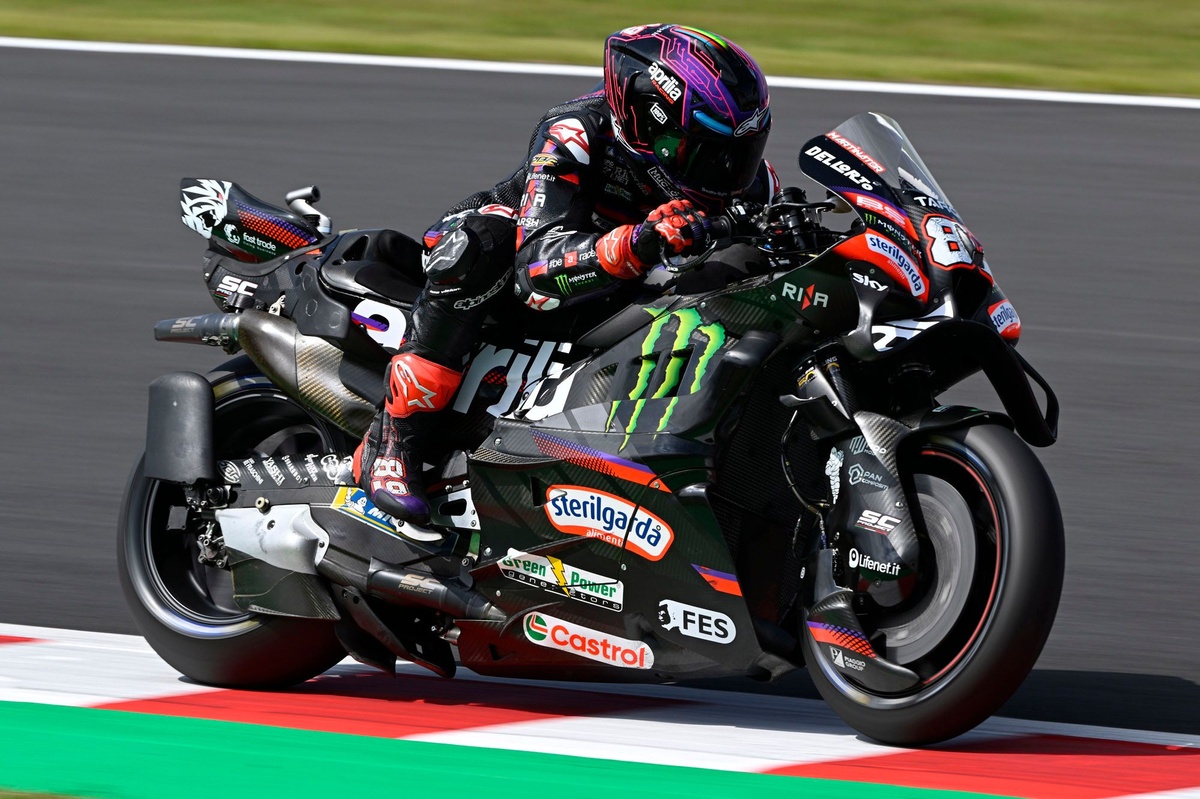
Michelin has banned the soft rear compound for Japan’s Sunday Grand Prix after the Motegi sprint revealed extreme tyre failures.
Immediate Cause: Temperature and Track Surface
The new high‑grip asphalt at Motegi, combined with an ambient temperature hovering around 40 °C, pushed rear‑tyre temperatures to dangerous levels during the sprint’s rapid pace.
Harder compounds were deemed safer, but the soft tyre’s construction led to blistering and structural failure for several riders.
Riders Suffering the Hardest Blow
Jorge Martin admitted he could not finish the sprint because the rear tyre cracked, leaving him in a low finish after a second‑place effort the day before.
Pecco Bagnaia’s rear tyre split cleanly at the centre, rendering it unusable and posing a safety risk for the remainder of the session.
Michelin’s Decision and Recommendations
Piero Taramasso removed the soft rear from the race allocation, leaving only medium and hard compounds. The medium is available but demands aggressive management.
Michelin endorses the hard rear, featuring a reinforced casing suitable for the demanding Japanese circuit and riders’ energy output.
Rider Reactions and Strategy Shifts
Jack Miller stated he will opt for the hard compound, calling the medium “blistering in the centre.” He also suggested an extended warm‑up for better tyre condition.
Fabio Quartararo, prior to the ban, expressed a preference for the soft compound if it were available.
Marc Marquez won the sprint but left open the possibility of the soft tyre for Sunday, testing the limits of tyre selection.
Warm‑up Concerns and Tactical Implications
Yamaha and other teams floated extending the usual 10‑minute warm‑up to better gauge tyre behaviour under race conditions.
Current MotoGP regulations keep the warm‑up brief, but the tyre crisis may prompt future adjustments to pre‑race procedures.
Historical Parallels and Championship Weight
The 2013 Australian GP saw Bridgestone’s uncertainty lead to an on‑track bike change and a near‑fatal lap for Marquez.
With the championship entering its decisive Asian tour phase, tyre integrity has become as critical as rider skill.
Impending Race and the Hard Compound
Across MotoGP, the hard tyre is already standard in Thailand, Brazil, and Austria, where Aprilia teams excelled and Ducati teams struggled.
As the Japanese GP approaches, all teams will now rely on the hard rear, providing a uniform starting point but raising questions over performance gaps.
Michelin’s restriction forces teams to pivot from aggressive soft‑compound strategies to a more conservative, structural approach, reshaping race dynamics for the weekend’s headline battle.
 "
"