
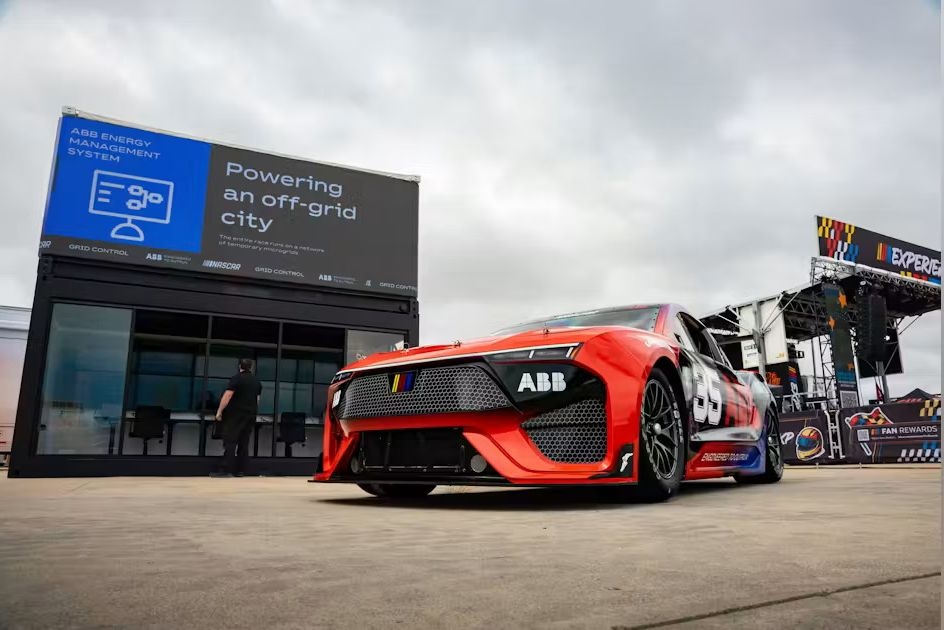
At Naval Air Station North Island, a sprawling network of 30 battery‑energy‑storage units and diesel generators electrified the entire San Diego NASCAR weekend, proving that large‑scale motorsport can thrive on a self‑contained microgrid.
Ingenuity on the Military Base
Because the race venue sits on an active naval installation, every power source had to be generated on‑site. The circuit weaved around the perimeter of North Island, limiting fan access to the southern edge while keeping the base’s operational airspace clear.
ABB supplied the technology, and its vice‑president of strategic partnerships, Chris Shigas, explained that a microgrid “combines generation, transmission and distribution into one closed system.” Shigas noted that the only larger off‑grid system on Coronado Island belongs to a nuclear‑powered aircraft carrier.
Microgrid Architecture and Operation
Each microgrid combined a battery‑energy‑storage system (BESS) with a diesel generator. The generators fired for roughly two hours each day, while the BESS supplied power for the remaining twenty‑two hours during the race weekend. This hybrid approach dampened the carbon footprint and reduced dependency on diesel fuel.
Visual monitors plotted generator activity over the course of each day, allowing officials to see when the batteries were charging and discharging in real time.
Birthplace of a Modern Racing Solution
The concept first emerged during NASCAR’s inaugural street‑course events in downtown Chicago (2023‑2025). Managing director of vehicle systems CJ Tobin likened the system to a “roving city” that follows the race wherever it travels. He highlighted that the technology can power remote race control, pit operations, fan amenities and support backstage logistics.
“The hybrid generators let us bring the entire control suite to any track,” Tobin said, acknowledging industry partners such as ABB, Suburban Propane and NASCAR R&D.
Commitment to Net‑Zero and Sustainability
NASCAR’s Impact department, led by Chief Impact Officer Eric Nyquist, set a net‑zero emissions target for 2035. The initiative focuses on 100 % renewable energy, low‑carbon bioethanol fuels, recycling and waste reduction.
Nyquist emphasized that maintaining the quality of the racing experience is paramount. “Our goal is zero disruption to fans or the racing product, while we transition our fleet and infrastructure to greener alternatives,” he said. He underscored that accurate data collection during the San Diego event informed future improvements.
Transparent Fan Experience
A 20‑by‑8‑by‑18‑foot glass pod displayed 11 live video feeds and data dashboards, modeled after NASCAR’s remote race‑control room. Fans could view live telemetry, analytics and camera angles, gaining unprecedented insight into the power strategy without revealing proprietary team information.
“By sharing the data and the decision‑making process, we want to increase transparency and provide fans a behind‑the‑scenes look at how we keep the race running sustainably,” Tobin added.
The San Diego microgrid experiment demonstrates NASCAR’s ability to fuse high‑performance racing with advanced, renewable power solutions—an approach the sanctioning body plans to extend to tracks worldwide.
 "
"