
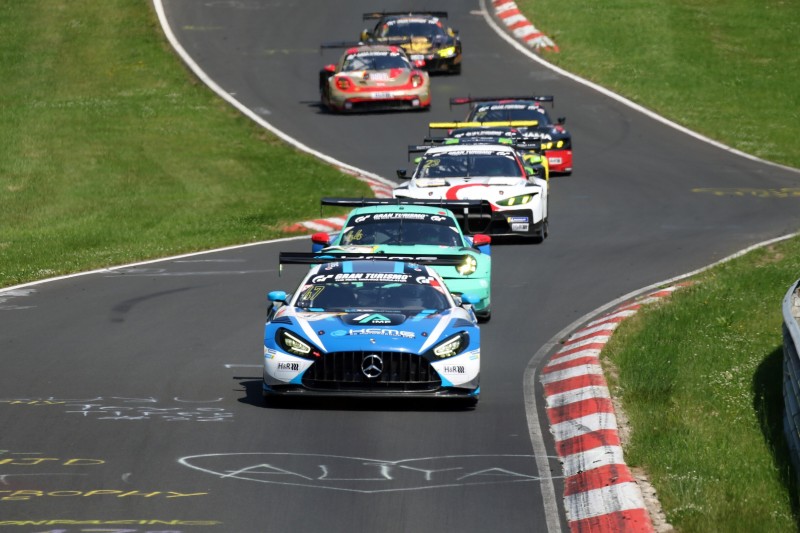
The ADAC Nordrhein’s announcement on 27 July 2026 of a rival Nordschleife series threatens the long‑standing VLN‑promoted Nurburgring Langstrecken‑Serie (NLS) and the 24‑hour marquee race.
VLN’s Structure and Recent Shake‑Ups
VLN Sport GmbH & Co. KG is owned by eight motoring clubs, each holding a 12.5 % stake. The clubs include ADAC Westfalen, ADAC Mittelrhein, and ADAC Nordrhein affiliates such as MSC Sinzig, MSC Adenau, MSC Ruhrblitz Bochum, Dortmunder Motorsport Club, ACAS, RG Duren, and MSC Munster.
Historically, every club ran its own championship round, but today only Duren and Munster lack dedicated events, forcing the remaining clubs to share multiple rounds.
Commercial operations once involved VLN VV GmbH & Co. KG, a joint venture with circuit owner NR Holding. The partnership dissolved in 2023, leaving VLN Sport as sole owner of commercial activities.
Mike Jager, former driver, assumed leadership in late 2022 after a leadership dispute. He introduced a customer‑first strategy that revived declining entry figures for the NLS, which still blends grassroots racing with GT3 machinery.
ADAC’s Regional Dynamics and the Power Play
The ADAC, while the largest German motorsport organisation, functions through 18 autonomous regional clubs. On the Nordschleife, the three key branches are ADAC Nordrhein, ADAC Mittelrhein, and ADAC Westfalen.
ADAC Nordrhein is the sole organiser of the Nurburgring 24 Hours and holds technical authority over the top‑tier GT3 (SP) classes and Balance‑of‑Performance controls.
ADAC Westfalen, represented in VLN Sport by Jurgen Hieke, is the only regional club with a direct shareholder seat in VLN Sport. Its local clubs in Bochum, Dortmund, and ACAS/Schwelm also hold individual shares.
ADAC Mittelrhein, under Rudi Speich, governs the International Truck Grand Prix and the GT World Challenge Europe rounds at the track and maintains two local clubs—Adenau and Sinzig—holding shares in VLN Sport.
Frictions between the Westfalen/Mittelrhein bloc and the powerful Nordrhein have long shadowed decision‑making, creating an uneasy alliance among the clubs.
NR Holding’s Legal Battle and Market Moves
Formerly owned by the state of Rhineland‑Palatinate, the Nordschleife fell into insolvency after a failed 2009 amusement park expansion. Russian billionaire Viktor Kharitonin acquired the venue through NR Holding in 2014.
NR Holding has traditionally resisted ADAC’s dominance over the circuit calendar, partnering with AvD to launch the Nurburgring Endurance Series (NES) in 2023 and attempting to displace the NLS.
The NES collapsed quickly amid paddock boycotts, prompting VLN to sue under the 2013 Rhineland‑Palatinate Nurburgring Act. The court ruled the track an “essential facility,” restraining NR Holding’s commercial freedom.
That decision was upheld in final proceedings in 2025, limiting NR Holding’s ability to amend its event schedule and threatening the venue’s valuation.
Presently, NR Holding seeks to overturn the essential‑facility precedent while VLN fights to maintain its long‑term presence on the circuit.
The Stakes for Endurance Racing on the Nordschleife
The conflict pits three stakeholders against each other: the VLN’s heritage over the NLS, ADAC Nordrhein’s control over the global 24‑hour event, and NR Holding’s commercial agenda.
Should ADAC Nordrhein’s new series secure exclusive dates, VLN might lose the NLS’s slot, while the Nurburgring 24 Hours could undergo a fundamental restructuring of its class hierarchy and broadcast partnerships.
The legal precedent that labels the Nordschleife an “essential facility” casts a shadow over private ownership, tightening the grip of ADAC and the clubs on the track’s future direction.
In this tightly contended arena, the sport itself faces a real threat: a reshaping of its premier endurance event and the framework that has governed it for half a century.
 "
"