
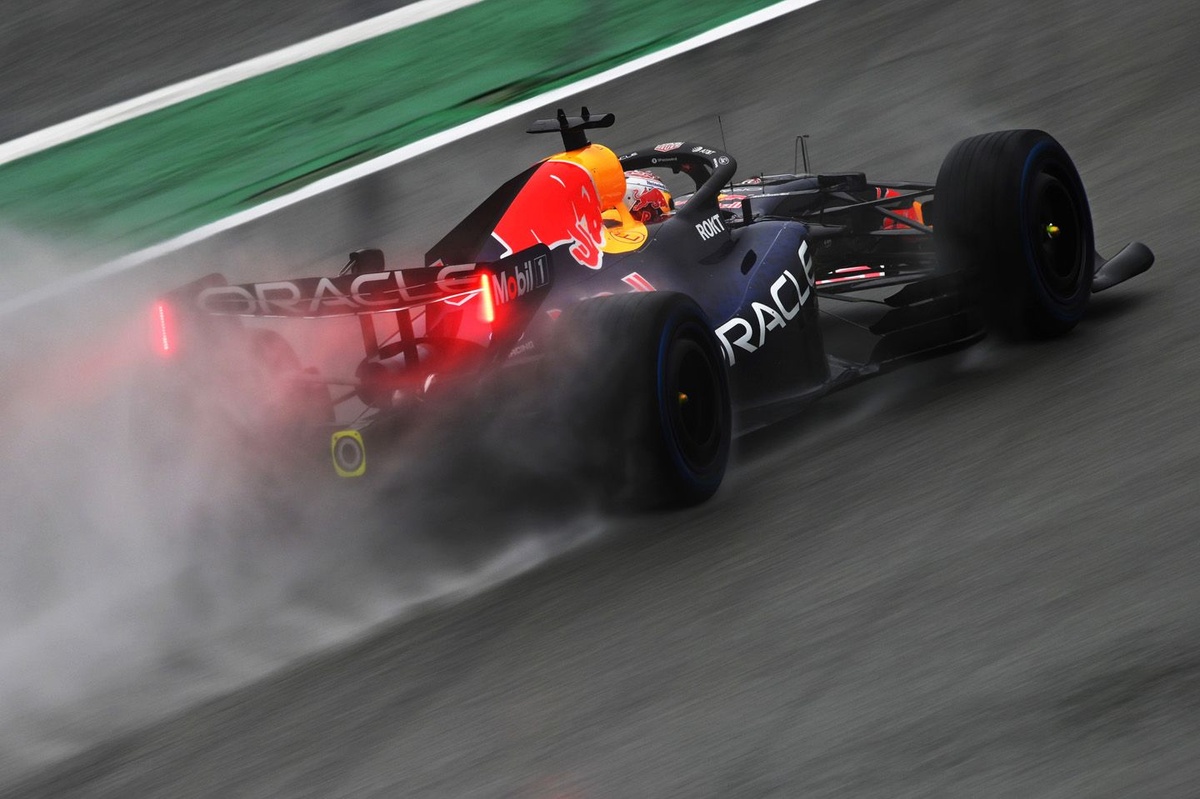
The Canadian Grand Prix is set to be a challenging event for Formula 1 drivers, with tyre supplier Pirelli warning that the combination of low temperatures and the Circuit Gilles Villeneuve layout could create complications, particularly if it rains. The potential for a wet race with F1’s new generation of cars has raised concerns among drivers and teams, with some expressing doubts about the safety and drivability of the cars in such conditions.
Tyre Concerns in Cold and Wet Conditions
Pirelli’s Simone Berra described the expected conditions in Montreal as “the perfect storm” due to the cold temperatures and low-energy circuit. With air temperatures forecast to be around 11 or 12 degrees Celsius, drivers would struggle to bring the tyres up to temperature, especially the intermediates. Berra noted that the full wets might struggle less than the intermediates, but it would still be a challenging situation.
On Saturday, several drivers, including polesitter George Russell, were told over the radio that their front tyres were too cold, despite running on slicks with track temperatures between 30 and 40 degrees Celsius. In wet conditions on Sunday, the challenge would be even greater, with Berra acknowledging that it would be difficult for drivers to maintain tyre temperature.
Circuit Gilles Villeneuve: A Unique Challenge
The layout of Circuit Gilles Villeneuve, with its long straights and relatively few corners, exacerbates the tyre temperature issue. Drivers like Max Verstappen have expressed concerns that the tyres would cool down too much on the straights, making it difficult to maintain grip. Verstappen likened driving with cold tyres to “driving on ice.”
Tyre Blanket Temperature Adjustments
To help drivers, the FIA and Pirelli have increased the tyre blanket temperature for intermediates to 70 degrees Celsius, with the full wets prescribed at 40 degrees. While this should help during the warm-up phase, Berra stressed that maintaining temperature in the tyres would remain a challenge.
Berra explained that even if drivers can get the tyres up to temperature initially, they risk losing it as the race progresses. Increasing the blanket temperature further might provide a temporary gain, but it wouldn’t prevent the tyres from cooling down later.
2026 Cars in Wet Conditions: A Step into the Unknown
Beyond the tyre concerns, the Canadian Grand Prix could provide the first real test of the 2026 cars in wet conditions. Drivers like Oscar Piastri have expressed concerns about the power units’ behavior in the rain, noting that they don’t like inconsistency and that it’s hard to be consistent in wet conditions.
Piastri highlighted that despite extensive preparation and simulation work, teams are still unsure how the new cars will perform in the wet. He joked that having thousands of the world’s best engineers unsure about the outcome is an “interesting place to be.”
FIA Safety Measures
To improve safety, the FIA has issued a rain hazard declaration, allowing teams to make ride-height modifications and reducing MGU-K deployment from 350 kilowatts to 250 kilowatts. The active aerodynamics in straight-line modes are also limited to the front of the car.
Despite these measures, drivers remain skeptical about the drivability of the 2026 cars in wet conditions. Verstappen stated that the cars are “not how they should be in the rain,” citing less downforce and the challenges of handling a hybrid engine in wet conditions.
Conclusion
The Canadian Grand Prix promises to be a challenging and potentially chaotic event, with the combination of cold temperatures, wet conditions, and the unique Circuit Gilles Villeneuve layout pushing drivers, teams, and the new generation of F1 cars to their limits. As the grid prepares for the race, the focus will be on adapting to these conditions and finding ways to maintain safety and competitiveness.
For fans and followers, the Canadian Grand Prix is shaping up to be an exciting and unpredictable event. Stay tuned for live coverage and updates as the teams and drivers navigate the challenges ahead.
 "
"