
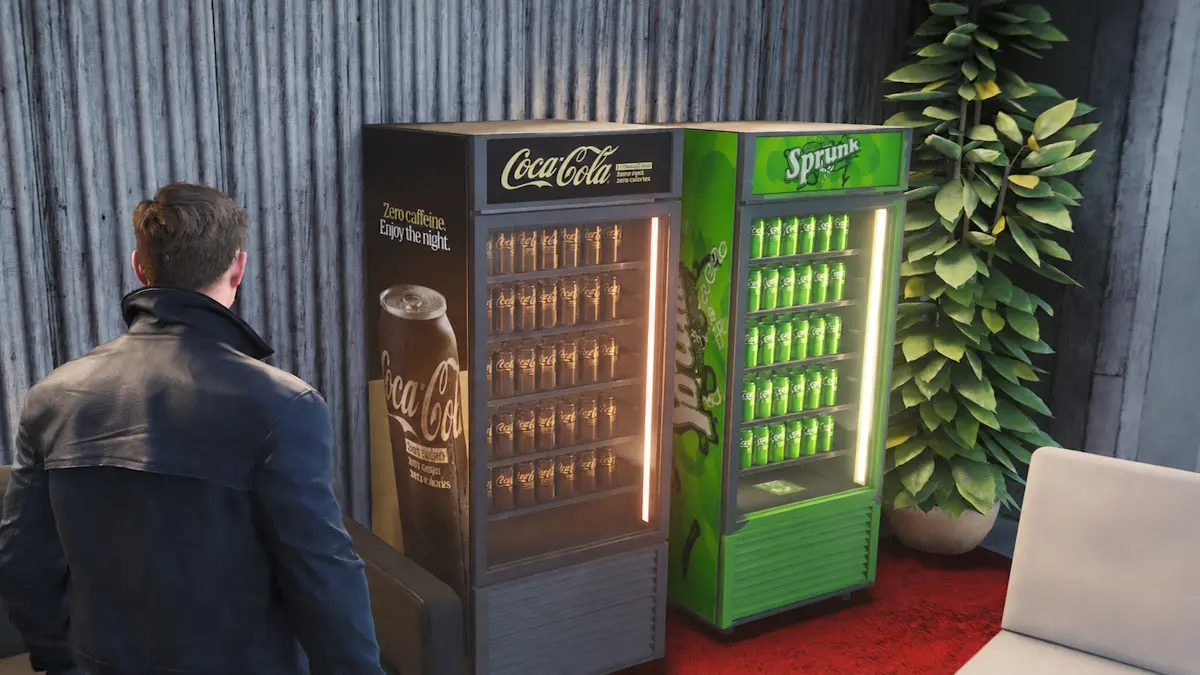
“007 First Light” demonstrates how in‑game advertising can feel like a natural part of a title, not an intrusive sales pitch.
Brands grow where realism is required
Video games often build cities, stadiums or racetracks that mirror the real world; a metropolis without billboards or a football arena lacking sponsors looks incomplete. By reproducing the clutter of everyday signage, developers give players a believable backdrop, and the embedded logos become part of the environment rather than a distraction.
Real‑world logos boost immersion
Driving an Aston Martin in a James Bond mission, racing a Ferrari in a Japanese open‑world setting, or spotting Coke cans on a virtual street all reinforce the sense that the game world exists alongside our own. In “Forza Horizon 6,” the presence of genuine manufacturers is essential – the series sells the fantasy of collecting and cruising dream machines, and authentic badges cement that promise.
Sports titles such as EA Sports FC and NBA 2K rely on sponsor boards, arena advertisements and branded uniforms; strip those away and the presentation instantly loses credibility, underscoring how integral brand placements are to the genre.
Fictional brands can outshine the real thing
Rockstar’s “Grand Theft Auto” franchise fills Los Santos with made‑up companies like Sprunk, eCola and Ammu‑Nation. These parodies feel as lived‑in as their real counterparts, proving that a well‑crafted fake logo can be more effective than a forced real‑world partnership.
The community often discusses these fictional names, generating free publicity for the game while avoiding the pitfalls of blatant product pushes.
Games hide ads, movies flaunt them
Film placements typically spotlight a product with conspicuous camera work, dialogue cues or overt branding, turning the item into the focal point. In contrast, successful in‑game advertising disappears into the scenery, supporting world‑building instead of dominating the narrative. A watch from Omega becomes James Bond’s gadget, while a BMW M3 GTR fuels the storyline of “Need for Speed: Most Wanted,” illustrating seamless integration.
Where the trend heads next
As developers continue to prioritize authenticity, we can expect even tighter bonds between real manufacturers and virtual environments. Interactive sponsorships, like the energy‑drink partnership in “Death Stranding,” show that direct player engagement with a brand can leave a lasting impression without breaking immersion.
When advertisements serve the game’s identity first and the advertiser second, they reinforce the illusion of a lived‑in world and keep players invested.
Ultimately, the most effective in‑game advertising is the kind players barely notice, because it has already become part of the game’s DNA.
 "
"