
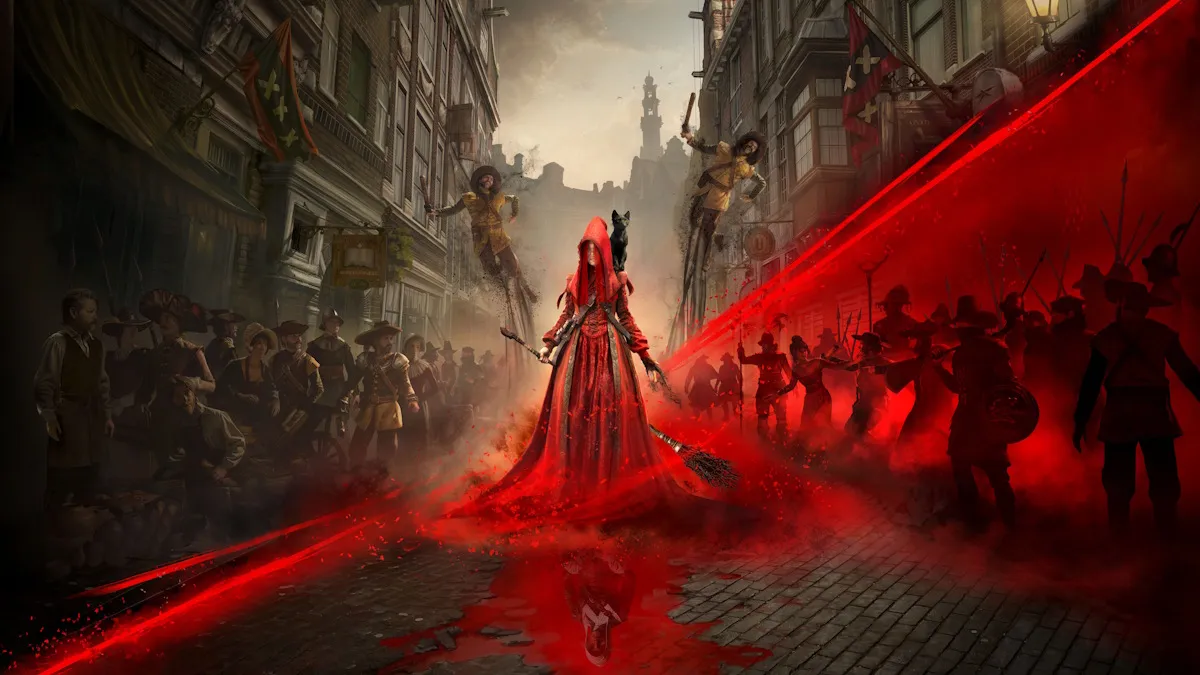
Panache Digital’s early‑access debut of 1666: Amsterdam repositions itself away from Assassin’s Creed’s Roman streets into a witch‑laden, cat‑centric exploration of a 17th‑century Dutch city.
Noa and Aaron: a Dual‑Perspective Adventure
The game begins directly after the demo, positioning Noa as the witch protagonist while her feline friend Aaron offers stealth and possession mechanics. Aaron can slip past tight spaces, trigger distractions, and even inhabit unsuspected NPCs, creating a rhythmic alternation that keeps gameplay fresh.
Meticulous Open‑World Exploration
Players receive clues or locations, then must deduce the next step without reliance on glowing pointers. This design emphasizes environmental reading and investigative satisfaction, transforming every building and passerby into potential narrative or tactical assets.
Combat Rooted in Assassin’s Creed Tradition
The combat system mirrors Assassin’s Creed Brotherhood, focusing on straightforward attacks, evasion, and timed ability usage. While not the deepest loop, it supports Noa’s growing arsenal and allows bosses to respond well to a variety of tactics.
Bugs Undermine Momentum
Technical glitches, such as entrapment on wooden platforms or abrupt graphical failures, interrupt investigative momentum. These errors highlight that while core systems often align seamlessly, polish remains uneven.
Modern‑Day Sequences Desire More
Revisiting 1999 scenes offers narrative context but rarely delves into action. Clio’s role is largely confined to book‑driven research, leaving modern‑day gameplay underutilised compared to the beloved Desmond arcs.
Overall, 1666: Amsterdam showcases unique ideas—witchcraft, time travel, dual protagonists, and cat exploration—that promise a compelling full release if technical issues are resolved and contemporary segments expanded.
 "
"