
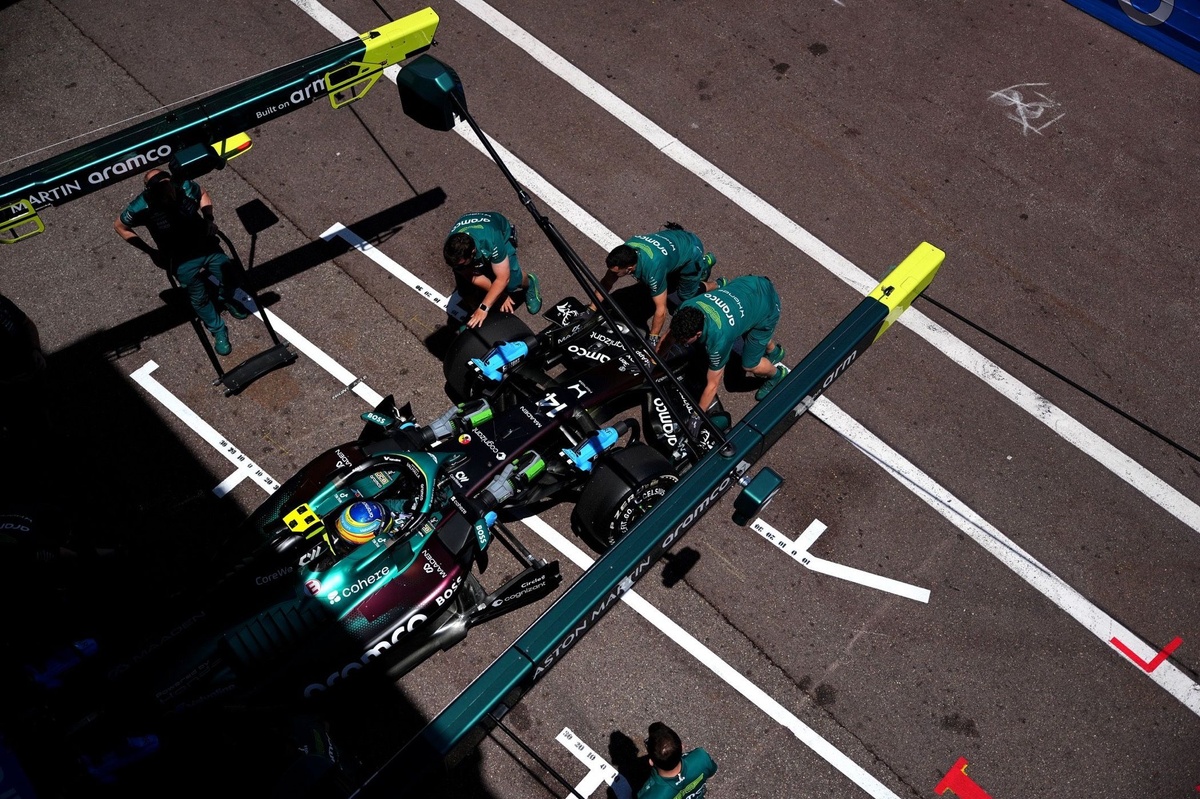
Pedro de la Rosa confirmed that Aston Martin’s AMR26 still suffers from serious driveability issues following Fernando Alonso’s incident at the Monaco Grand Prix.
Monaco mishap reveals car’s erratic rear‑end behavior
Alonso clipped the barrier in the chicane, escaping with only minor front‑wing damage after a sudden rear‑wheel lock forced him to release the brakes to avoid a spin. The crash occurred a day after the Spaniard warned of “random downshifts” during his Thursday media day, a symptom he linked to potential rear‑locking.
Technical background: gearbox, power unit and downshift interaction
Since switching from Mercedes‑sourced engines to Honda’s works power unit and developing its own gearbox, Aston Martin has encountered friction between the new drivetrain components. De la Rosa explained that an unstable downshift can upset brake balance, pushing the rear axle rearward and amplifying the lock‑up tendency. He noted drivers are forced to use extremely short gears at apexes to recharge the hybrid battery, which further destabilises torque delivery during deceleration.
Team response and outlook
The team is concentrating on improving predictability and overall driveability, acknowledging that the car remains “too difficult to drive” across the board, not just in Monaco. While de la Rosa could not confirm whether the crash stemmed primarily from braking, rear locking, or a downshift error, he stressed that resolving the underlying drivetrain integration will be a priority for the upcoming races.
Continued work on harmonising the Honda power unit with Aston Martin’s bespoke gearbox will determine whether the AMR26 can shed its erratic character and become a contender for future podiums.
 "
"