
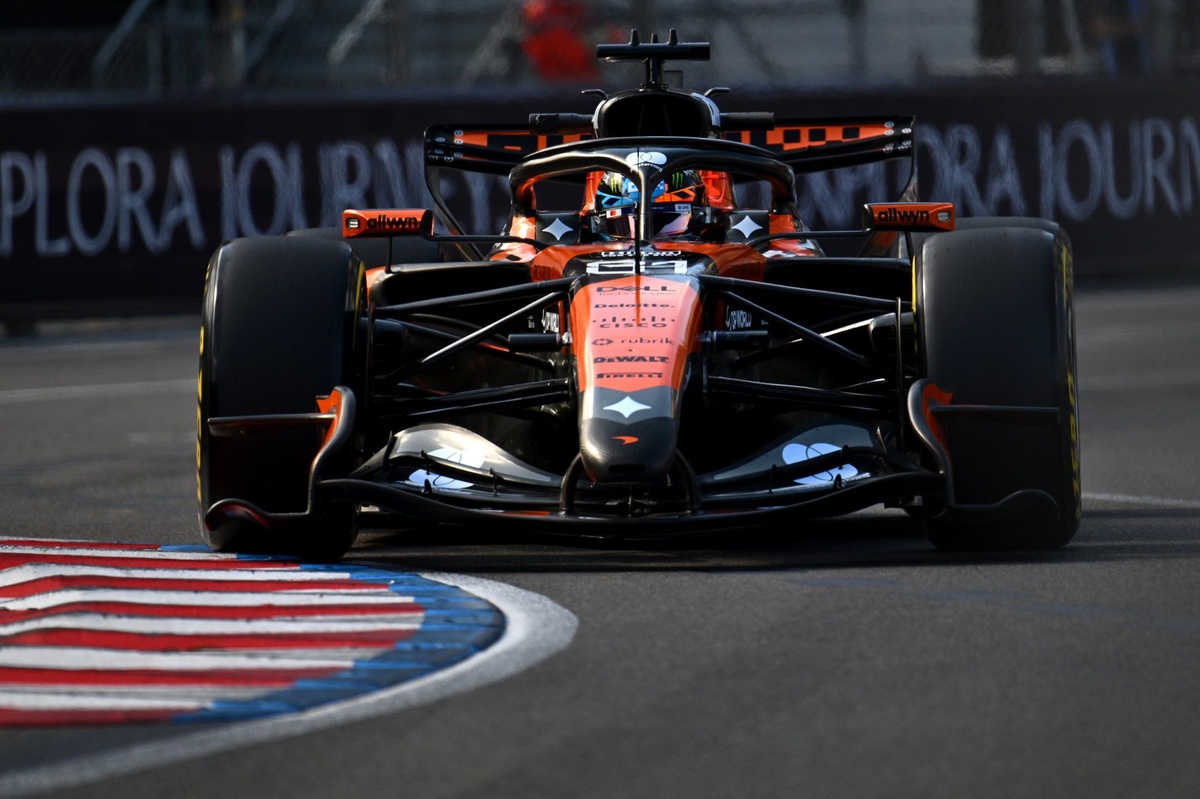
Monaco’s cramped streets will push the 2026 power unit to harvest the full 9 MJ of energy allowed in qualifying, creating a situation where an over‑charged battery could actually impair the car’s performance.
Energy recovery advantage on the principality’s layout
The circuit’s abundance of low‑speed corners and frequent braking zones lets the MGU‑K recharge the battery with little difficulty, a stark contrast to the 6 MJ limit seen at tracks like Canada.
Because the FIA has set the maximum qualifying harvest at 9 MJ – the same figure used in Shanghai – Monaco can showcase the electric component of the hybrid system without the need for long‑straights that would otherwise force drivers to limit power.
Regulation‑driven speed ceiling and its consequences
To prevent the electric boost from inflating top speeds, the governing body has moved the MGU‑K derating point from 290 km/h to 200 km/h for this venue.
This lower threshold means the hybrid system must be managed more carefully, especially as the battery approaches full capacity early in a lap.
When a full battery becomes a liability
Teams risk hitting the 9 MJ ceiling too quickly, which disables the MGU‑K’s ability to convert kinetic energy into stored charge and, consequently, its capacity to add load on the engine for turbo spooling.
Without that artificial load, the turbocharger can linger in its low‑speed range, producing noticeable lag during the first metres out of a slow corner.
Liam Lawson warned that “having too much energy can really complicate things,” noting that early‑race laps at reduced speed leave little opportunity to deploy stored power.
Driver strategies to keep the turbo responsive
Oscar Piastri explained that a full battery limits the MGU‑K’s assistance for turbo spin‑up, a factor that may favour Ferrari’s smaller turbo unit.
McLaren’s Lando Norris and others anticipate using first gear or very low gears more often, keeping engine revs high and generating enough torque to keep the turbo alive until the battery can accept more energy.
Oliver Bearman highlighted that, while electric power is banned at the race start, the MGU‑K can still create engine load on corner exit – provided the battery isn’t already saturated.
Implications for Monaco qualifying and the race
With the maximum 9 MJ harvest permitted, teams will aim to balance aggressive energy capture against the risk of early saturation, a delicate act that could differentiate the frontrunners.
The combination of tight corners, early MGU‑K derating, and turbo‑lag concerns suggests that optimal pace will come from precise gear selection and disciplined energy management rather than raw power alone.
 "
"